
On a Sentence from "Traces of Enayat"

أيضًا، فهذه الأنطولوجيا لا تختصّ بنوع أدبيّ بل هي جنس جامع لكل الأنواع والضروب الأدبية ويجانس بينها. جاء في معجم (لسان العرب): ”الجِنْسُ: الضَّرْبُ من كلّ شيء، وهو من الناس ومن الطير ومن حدود النَّحو والعَروض والأشياء جملةً […]، والجنسُ أعمُّ من النوع، ومنه المجانسة والتجنيس.“
Nor is this anthology to be the preserve of any particular genre. It is tobe a jins jaami, a catch-all for every literary form and approach. It shall allow mujaanasa, which is to say, coexistence. The great thirteenth-century dictionary Lisan al-Arab, or The Tongue of the Arabs, says the following:
jins: meaning ‘class’ or ‘category’, the ‘genus’ of all things and anything, be it people or birds or parts of speech or prosody or collective nouns […] jins is broader in meaning than ‘type’ or ‘kind’, and from it is derived mujaanasa, meaning ‘to bring together’ or ‘hybridise’, and tajnees, which means ‘to make alike’.
Much of Iman Mersal’s book is mediated through different registers and genres: different writings. They might come by way of direct quotation, or be more subtly invoked: ghosts haunting the prose. As it happens, a great deal of this writing is in some way bad—insincere eulogies by talentless hacks, the dull and deadly letter of the law, dodgy poetry, prose flat and prose purple, movie dialogue. What matters here is the way in which it is bad; making bad writing work can be harder than translating beautiful prose. The latter effort is to some degree (though maybe not always) sheltered by a reader’s indulgence, whereas the former, deliberately deployed, is often related to humor, and so remains unprotected. It is either the setup or the punchline and despite itself, must be enjoyable. Invention is required: the English must be bad as English; it must explain the badness on its own terms.
While I’d like to think that this little extract isn’t a demonstration of bad writing, it is an instance of invention. The first paragraph contains a straightforward gloss: “thirteenth-century” is an addition to prepare the reader for what follows. It makes space for play, which the compressed register of the actual entry might require when expanded. Why expand it? Here is another translation of the entry:
Jins—a category of anything, used of people, birds, parts of speech, prosody, and collective nouns. Jins is more general than ‘type’ and from it comes mujaanasa and tajnees.
Ostensibly, the entry in the text is summoned to help explain the terms, “jins jaami” and “mujaanasa” (though this last, in the Arabic, is used verbally and as a piece of terminology). Both are glossed when they first appear, a first pass, though neither of these definitions are repeated when it comes to the entry. A process of triangulation is taking place: the pace of the text is slowing, and the reader’s faith in its clarity is challenged—they can take less and less as read. Jins is made significant: first comes its shared etymology with ‘genus’ and the deployment of multiple words to locate the concept and its derivations (none are given in the Arabic). Then follows the attempt to lend this brazen glossing an authenticity, a logic, with a kind of gravitas built up from the faintly archaic “be it people” or “and from it is derived,” the ponderous pedagogic rhythms of “all things and anything,” the list with its battering “or . . . or . . . or,” the repeated use of the verb “mean.” More than the point made can bear, surely? But then again, to begin with the entry never was needed linguistically. Its central line is the list, the briefly glimpsed vista of a bizarre menagerie, a confluence of all things in a word: “people, birds, parts of speech.” The entry’s strange heaviness applies a brake and offers an off-ramp into pure digression: the opportunity to play a game with Arabic. Pausing to play might grant the reader time to notice how jins, mujaanasa and tajnees share a root, and even time to consider how the meanings of these derivations relate to one another; maybe they will feel the entry picking them up as in a net, themselves held in a ball both claustrophobic and infinite. Maybe they will read the entry not only as, say, the key to the anthology’s form, but as a set-up (belated and retrospective) to the book that lies around it.
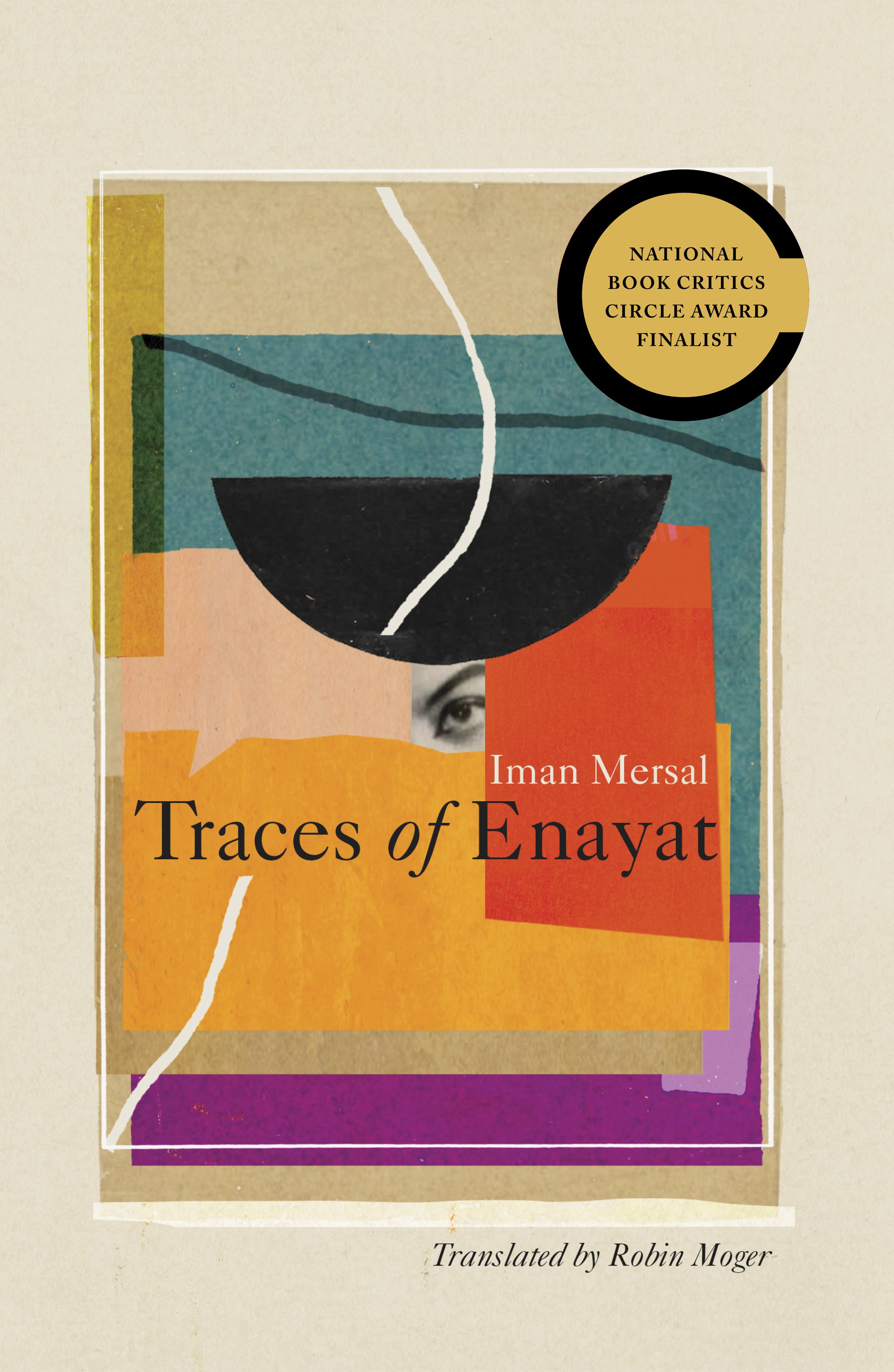
Iman Mersal
Translated from the Arabic by Robin Moger.
National Book Critics Circle Award Finalist
From one of the preeminent poets of the Arabic-speaking world, a brilliant work of creative nonfiction retracing the mysterious life and erasure of Egyptian literature's tragic heroine.
"A subtle and universal exploration of identity."—Aida Alami, The New York Times
Cairo, 1963: four years before her lone novel is finally published, the writer Enayat al-Zayyat takes her own life at age 27. For the next three decades, it's as if Enayat never existed at all.
Years later, when celebrated Egyptian poet Iman Mersal stumbles upon Enayat's long-forgotten Love and Silence in a Cairo book stall, she embarks on a journey of reflection and rediscovery that leads her ever closer to the world and work of Enayat al-Zayyat.
In this luminous biographical detective story, Mersal retraces Enayat's life and afterlife though interviews with family members and friend, even tracking down the apartments, schools, and sanatoriums where Enayat spent her days. As Mersal maps two simultaneous psychogeographies--from the glamor of golden-age Egyptian cinema to the Cairo of Mersal's own past--a remarkable portrait emerges of two women striving to live on their own terms.
With Traces of Enayat, Iman Mersal embraces the reciprocal relationship between a text and its reader, between past and present, between author and subject.